Author: admin

  • What Are Validation Services? Everything You Need to Know

    What Are Validation Services? Everything You Need to Know

    In today’s highly regulated world, businesses, especially those in pharmaceuticals, biotechnology, medical devices, food, and software, must prove that their processes work exactly as intended. This proof isn’t optional; it’s the backbone of compliance, quality, patient safety, and long-term trust.

    That’s where Validation Services come in.

    Validation is more than documentation or technical tests. It’s a disciplined, structured approach to ensuring products, systems, and processes perform reliably every single time. Whether you’re launching a new system, upgrading legacy equipment, or preparing for an FDA audit, validation services protect your organization from costly risks and bring peace of mind that everything is running safely and consistently.

    In simple words: Validation Services help you show evidence that what you build, manufacture, test, or automate is actually working and that it can stand up to regulatory scrutiny.

    Why Validation Services Matter

    For many teams, validation can feel overwhelming. There are documents, audits, protocols, templates, and shifting regulatory expectations. Yet, at its core, the goal is simple:

    1. To ensure processes are repeatable
    2. To ensure systems are accurate
    3. To ensure products are safe

    When done right, validation creates confidence—for manufacturers, regulators, employees, and most importantly, customers.

    Types of Validation Services

    Different industries require different types of validation. Here’s a simplified breakdown to help you understand how they work and where they apply.

    1. Computer System Validation (CSV)

    This ensures software and computerized systems used in regulated environments work correctly and consistently.

    Used for:
    1. Laboratory systems
    2. Manufacturing execution systems
    3. ERP, LIMS, QMS, CRM
    4. HRMS and medical systems
    5. Electronic batch records

    CSV evaluates whether the system meets user requirements, regulatory expectations (like FDA 21 CFR Part 11), and data-integrity principles.

    2. Process Validation

    This confirms that a manufacturing process can reliably produce quality products across multiple batches.

    Used in:
    1. Pharmaceuticals
    2. Biologics
    3. Medical devices
    4. Food manufacturing

    Process validation is usually performed in three stages:

    1. Process Design
    2. Process Qualification
    3. Continued Process Verification

    3. Equipment Qualification (IQ, OQ, PQ)

    This verifies equipment performance through Installation, Operational, and Performance Qualification tests.

    Quick Overview Table

    Qualification StageWhat It ChecksExample Activities
    IQ – Installation QualificationWas the equipment installed correctly?Utility checks, component verification
    OQ – Operational QualificationDoes it work within defined limits?Functionality tests, alarms, controls
    PQ – Performance QualificationCan it perform under real conditions?Batch runs, performance consistency

    4. Cleaning Validation

    Ensures that cleaning procedures remove contaminants, residues, and microorganisms from equipment surfaces.

    • Essential for:
      1. Pharmaceutical manufacturing
      2. Nutraceuticals
      3. Sterile products
      4. Chemical processing

    Cleaning validation protects patients and prevents cross-contamination.

    5. Method Validation

    Verifies that laboratory testing methods are accurate, precise, specific, repeatable, and robust.

    6. Data Integrity Validation

    This ensures data is complete, consistent, and accurate from creation to archival.

    Focused on ALCOA+ principles:
    Attributable, Legible, Contemporaneous, Original, Accurate + Complete, Consistent, Enduring, Available

    Why Companies Use Validation Services

    Here are the most common reasons organizations rely on professional validation experts:

    • Regulatory Compliance

    FDA, EMA, MHRA, WHO, and other regulators demand well-validated systems and processes.

    • Risk Reduction

    Validation minimizes the chances of product failure, recalls, or compliance violations.

    • Audit Preparedness

    Having proper validation documentation helps you pass audits with confidence.

    • Operational Efficiency

    Validated processes reduce downtime, errors, and rework.

    •  Improved Product Quality

    Every customer receives a safe, consistent, reliable product.

    How Validation Services Usually Work

    Here’s a simplified end-to-end flow of how a validation project is executed:

    1. User Requirement Specification (URS)

    Define what the system or equipment must do.

    2. Risk Assessment

    Identify what could go wrong and prioritize critical parameters.

    3. Validation Plan

    Create a roadmap for documentation, testing, and responsibilities.

    4. Protocol Development

    Prepare IQ, OQ, PQ, CSV protocols, test scripts, templates, etc.

    5. Execution

    Perform the actual testing and evidence gathering.

    6. Deviations & Resolutions

    Investigate failures, document root causes, and implement fixes.

    7. Final Report

    Summarize findings and provide documented proof of validation.

    A Simple Comparison Table

    AreaWithout ValidationWith Validation
    ComplianceRisk of violations, major audit findingsSmoother audits, clear documentation
    Product QualityInconsistent batchesPredictable quality
    Operational StabilityFrequent breakdowns or failuresReliable performance
    Risk ExposureHigh recalls, customer complaintsMinimized risks
    TrustReduced credibilityHigher customer and regulatory trust

    Industries That Rely on Validation Services

    Validation is essential across a wide range of fields:

    1. Pharmaceuticals & Biotech
    2. Medical Devices
    3. Food & Beverage
    4. Cosmetics
    5. Healthcare & Hospitals
    6. Software as a Medical Device (SaMD)
    7. Laboratories
    8. Manufacturing Industries

    Whether it’s automated equipment, lab instruments, new machinery, or cloud-based systems, validation ensures everything works exactly as intended.

    Key Highlights & Pointers

    Here are some quick pointers that make validation easier to understand:

    • Validation is not a one-time activity it’s ongoing.
    • Documentation is just as important as testing.
    • Every validation must be risk-based, not overly complicated.
    • Data integrity is a core requirement in all validation projects.
    • Automation and advanced digital tools are improving validation timelines.
    • A validated system must be maintained, reviewed, and monitored regularly.

    A More Human Perspective: Why Validation Matters

    Behind every medicine that a patient takes, behind every medical device, behind every safety report or laboratory test—there is a system responsible for that accuracy.

    People can get hurt when systems fail.

    At the root, validation is the protection of people. It makes sure that every pill, every medical device, every batch, and every dataset has been made with due care, precision, and accountability.

    For manufacturers, validation eliminates the guesswork. For auditors, it provides traceability. For employees, it brings confidence. And for customers, it builds trust.

    That is why validation services are much more than technical tasks; they are quality guardians.

    Conclusion

    Validation provides the core of quality assurance in highly regulated industries. Whether one is implementing a new system, scaling up manufacturing, launching a medical device, or preparing for an audit, validation ensures that everything performs consistently and safely.

    Whether your organization is seeking stronger compliance, better product quality, or operational efficiencies, engaging the right validation experts can transform the way you do business.
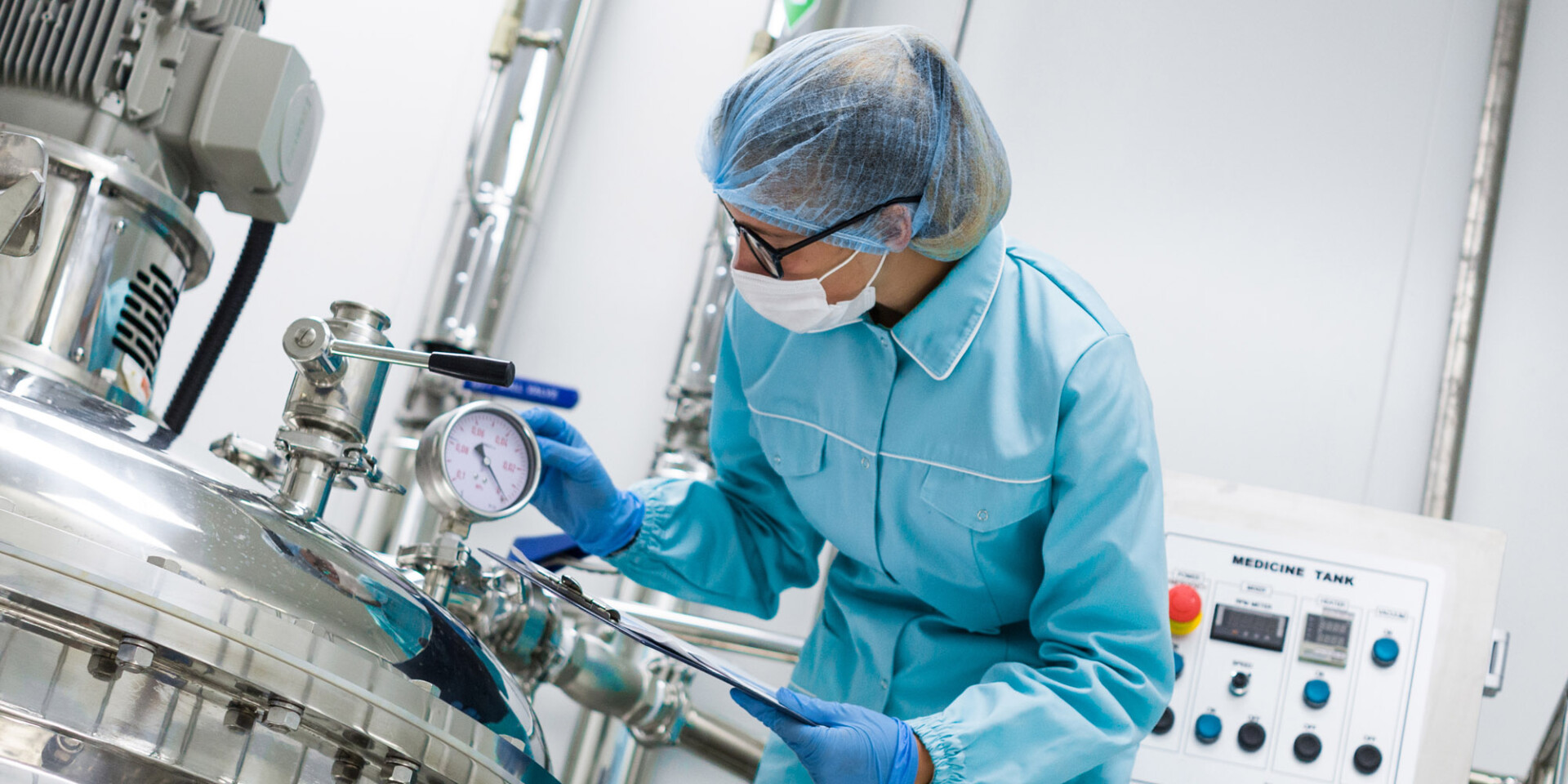
  • Cleaning Validation: Ensuring Equipment Cleanliness and Product Safety

    Cleaning Validation: Ensuring Equipment Cleanliness and Product Safety

    When it comes to pharmaceutical manufacturing, even minute details are important. Behind every product that reaches a patient, there is a lot of checking, controlling, and processing going on to protect the patients from harm. Among them, cleaning validation plays one of the most crucial roles.

    At face value, cleaning would appear rather uncomplicated, a matter of relatively simple concern: making the equipment look clean. In practice, cleaning validation is decidedly more complex: a scientific process that is methodical and thoroughly documented, aimed at proving that manufacturing equipment is cleaned deeply and well every time. The objective is rather basic: no residue, no cross-contamination, and no risk to the next batch or to the patient that depends on it.

    The U.S. FDA and other regulatory bodies, such as the EMA, place heavy emphasis on cleaning validation because it directly affects product quality and patient health. And in any GMP-compliant facility, a strong cleaning validation program isn’t just a good practice; it’s an expectation.

    What follows is a clearer, more approachable breakdown of what cleaning validation really means in day-to-day operations; tables have been included to help simplify and organize the key concepts.

    What Is Cleaning Validation?

    Cleaning validation is the documented evidence proving that a cleaning procedure consistently removes residues of active ingredients, excipients, cleaning agents, and microorganisms from manufacturing equipment.

    In other words, it verifies that:

    • The equipment is clean enough before starting the next batch
    • No harmful residue remains.
    • The cleaning process is repeatable and scientifically justified

    This helps maintain product quality and protects patients from unexpected exposure to chemical or microbial contaminants.


    Why Cleaning Validation Matters

    Key Reasons for Cleaning Validation

    ReasonWhy It Matters
    Prevent Cross-ContaminationEven tiny residues can harm patients, especially with potent or allergenic drugs.
    Regulatory RequirementFDA, EMA, and WHO expect robust cleaning validation as part of GMP compliance.
    Ensures Product SafetyPrevents impurities, degradation products, or microbes from entering the next batch.
    Maintains Equipment ReliabilityConsistent cleaning reduces downtime and prevents buildup that may impact machinery.
    Avoids Recalls or Legal IssuesStrong programs reduce the risk of regulatory citations, recalls, and financial loss.

    Strong cleaning validation isn’t just about compliance; it protects patients and preserves a company’s reputation.

    Key Components of a Cleaning Validation Program

    A thorough program combines risk assessment, scientific justification, employee training, and continuous monitoring.

    Major Components of a Cleaning Validation Program

    ComponentDescription
    Risk AssessmentIdentifies potential contamination risks, product potency, equipment challenges, and cleaning difficulties.
    Acceptance CriteriaDefines the maximum allowed residue limits based on toxicology and health-based exposure limits.
    Sampling MethodsIncludes swab sampling for surfaces and rinse sampling for overall cleanliness.
    Analytical Method ValidationTechniques such as HPLC, TOC, or UV must be validated to detect trace residue accurately.
    Validation RunsTypically, three consecutive successful cleaning cycles prove repeatability.
    DocumentationComplete evidence protocols, results, deviations, and reports must be recorded for audit readiness.

    Each component plays a role in making the validation process scientifically defensible and compliant.

    Types of Sampling Used in Cleaning Validation

    Two main sampling approaches help verify cleanliness.

    Comparison of Sampling Methods

    Sampling MethodHow It WorksBest Used For
    Swab SamplingA sterile swab is rubbed on defined equipment areas to collect residue.Hard-to-reach areas, surface hotspots, and direct residue detection.
    Rinse SamplingThe rinse water from the equipment is tested for dissolved contaminants.Large surface areas, inaccessible equipment parts, and recovery of soluble residues.

    In many cases, both sampling methods are used together to provide a complete picture of equipment cleanliness.

    Acceptance Criteria in Cleaning Validation

    Acceptance limits are determined based on toxicity, potency, batch size, equipment surface area, and cleaning capability.

    Factors Affecting Acceptance Limits

    FactorImpact on Cleaning Limits
    Potency of APIMore potent drugs require stricter limits.
    ToxicityHigher toxicity demands lower allowable residue.
    Batch SizeLarger batches may dilute residue, influencing limits.
    Equipment Surface AreaLarger areas require proportional calculations for MACOs (Maximum Allowable Carryover).
    Cleaning AgentResidue of detergents or solvents also needs a limit justification.

    Modern guidance encourages using Health-Based Exposure Limits (HBELs) for scientific limit-setting.

    Best Practices for Effective Cleaning Validation

    An effective program is built on consistency, scientific data, and continuous improvement.

    Best Practices Summary

    Best PracticeWhy It Matters
    Apply Lifecycle ApproachEnsures validation continues after initial qualification.
    Assess Equipment DesignIdentifies areas that are difficult to clean.
    Select Suitable Cleaning AgentsShould remove residues effectively without damaging equipment.
    Train Operators ThoroughlyReduces human error and improves consistency.
    Conduct Periodic MonitoringEnsures cleaning remains effective over time.
    Use Digital SystemsElectronic records improve accuracy, traceability, and audit readiness.

    These best practices help maintain compliance and reduce cleaning-related failures.

    Conclusion

    Cleaning validation isn’t just a box to be checked off in a pharmaceutical quality system; it’s one of the foundations that keep patients safe. When we perform cleaning process validations, we’re proving with real data that our equipment is truly clean, free from potentially harmful residues, and ready to manufacture the next batch without risk. It’s a scientific process, yes, but it’s also a reflection of our responsibility to every person relying on medicines produced by us.

    A strong cleaning validation program goes beyond meeting regulatory expectations: it’s a demonstration of corporate commitment to doing things right, consistently and transparently, while keeping patient safety at the center. When manufacturers take the time to build a thorough, well-documented, and risk-based approach, they aren’t just protecting their products but also the people who entrust them with their health.

  • Pharmaceutical Validation: Ensuring Quality, Safety, and Regulatory Compliance

    Pharmaceutical Validation: Ensuring Quality, Safety, and Regulatory Compliance

    In the pharmaceutical world, the stakes are high. Patients rely on the medicines they take every day to be safe, effective, and consistent. Behind every successful batch of a drug is a process that has been carefully validated to ensure quality and compliance.

    Pharmaceutical validation is not just a regulatory requirement; it is the backbone of trust between manufacturers, regulators, and patients. It ensures that processes, equipment, and systems reliably produce products that meet predefined standards for quality, safety, and efficacy.

    What Is Pharmaceutical Validation? Think of pharmaceutical validation as a way of saying, “We know our process works, and we can prove it.”

    It is the documented process that confirms manufacturing processes, equipment, and testing methods consistently deliver the desired results. Unlike quality control, which checks the final product, validation focuses on the process itself to ensure it is reliable from start to finish.

    Key Points About Pharmaceutical Validation:

    AspectDescription
    PurposeEnsure processes consistently produce products meeting quality standards
    ScopeEquipment, processes, cleaning, analytical methods, and computer systems
    BasisGood Manufacturing Practices (GMP) and regulatory guidelines
    OutcomeDocumented proof of process reliability and reproducibility

    By validating processes, manufacturers reduce variability, minimize errors, and ultimately protect patient safety.

    Why Pharmaceutical Validation Matters

    1. Ensures Consistent Quality: A validated process guarantees that every batch of medicine meets the same high standards for purity, potency, and stability.

    2. Protects Patient Safety: Validation controls potential risks, including contamination, improper potency, or instability.

    3. Demonstrates Regulatory Compliance: Regulatory agencies like the FDA, EMA, and WHO require manufacturers to validate processes to comply with GMP standards.

    4. Improves Efficiency and Reduces Costs: Validated processes reduce rework, unnecessary testing, and waste.

    Benefits Summary Table:

    BenefitHow It Helps
    Consistent QualityReduces batch-to-batch variation
    Patient SafetyMinimizes risks of contamination or errors
    Regulatory ComplianceEnsures audit readiness and avoids sanctions
    Operational EfficiencyReduces rework, waste, and production costs

    Types of Pharmaceutical Validation 

    Validation is not one-size-fits-all. It covers multiple aspects of manufacturing and testing.

    TypePurpose
    Equipment Qualification (IQ/OQ/PQ)Ensures equipment is installed correctly, operates reliably, and performs as intended
    Process ValidationConfirms that the manufacturing process consistently produces quality products
    Cleaning ValidationEnsures cleaning procedures remove residues to prevent cross-contamination
    Analytical Method ValidationVerifies testing methods are accurate, reliable, and reproducible
    Computer/System ValidationConfirms that software and automated systems function reliably and securely

    The Three Stages of Process Validation

    Validation is a journey, not a one-time task. The FDA and other agencies outline a three-stage lifecycle for process validation:

    StageDescriptionKey Activities
    Stage 1: Process DesignDevelop the process based on scientific understandingDefine Critical Quality Attributes (CQAs), identify Critical Process Parameters (CPPs), risk assessments, and establish control strategies
    Stage 2: Process QualificationTest the process under production conditionsEquipment qualification (IQ/OQ/PQ), trial batches, monitoring results, document reproducibility
    Stage 3: Continued Process VerificationEnsure ongoing consistencyContinuous monitoring of process parameters, periodic reviews, corrective actions, and revalidation if needed

    A Validation Master Plan (VMP) guides this entire lifecycle, clearly outlining scope, responsibilities, timelines, and acceptance criteria.

    Challenges in Pharmaceutical Validation 

    1. Complex Processes and Equipment – Modern manufacturing is intricate, requiring detailed validation for each step. 

    2. Documentation Management –  Accurate and complete records are essential for compliance and audits.

     3. Changing Regulations –  Regulatory requirements evolve, requiring periodic reviews and updates. 

    4. Balancing Efficiency and Compliance – Upfront effort is significant, but it reduces long-term risk and cost.

    Best Practices for Effective Validation

    Best PracticeKey Tip
    Comprehensive VMPPlan the scope, responsibilities, timelines, and acceptance criteria upfront
    Identify Critical ParametersFocus on CQAs and CPPs, using risk assessments to prioritize validation efforts
    Qualify Equipment and SystemsEnsure all equipment, cleaning procedures, and analytical methods are validated
    Document EverythingProtocols, deviations, corrective actions, and reports must be thorough and accurate
    Continuous MonitoringUse Continued Process Verification to detect trends and maintain control
    Embed Quality CulturePromote proactive risk management and continuous improvement across teams

    Conclusion

    Pharmaceutical validation is more than a regulatory checkbox; it is the foundation of trust. It guarantees that the medicines reaching patients are safe, effective, and consistently high quality.

    A strong validation program reduces risks, improves efficiency, and ensures compliance with global regulatory standards. For pharmaceutical companies, investing in validation is investing in reputation, patient safety, and long-term success.

    At helpwithvalidation.com, we believe that robust validation practices are essential for building quality medicines that patients can rely on batch after batch, dose after dose.

  • Understanding the Basics of Computerized System Validation (CSV) in Pharma

    Understanding the Basics of Computerized System Validation (CSV) in Pharma

    Introduction

    In today’s pharmaceutical world, digital systems are important for every operation. They are important for things like manufacturing lines, quality testing and even for data recording and batch release. 

    When these systems are functioning well, they protect product quality and patient safety. But if they fail, a small error can turn into big compliance risks.

    That’s why Computerized System Validation (CSV) is important. CSV is the structured and documented approach that makes sure a computerized system works as it should.

    It also makes sure that it consistently delivers accurate data and fully complies with regulatory requirements. It gives companies the confidence that their digital systems are both reliable and audit-ready.

    Why CSV Matters in the Pharmaceutical Industry

    In pharmaceutical companies, there are strict regulations and the system that is used for GMP or GxP activities should be trustworthy. CSV ensures:

    • Patient safety: When systems are validated, they reduce the risk of errors that can affect product quality. This way it ensures safety of the patient.
    • Data integrity: Data integrity is another important thing. When roles are strong, they prevent data manipulation, misentry, and loss.
    • Regulatory compliance: If you fail to validate the system, it can result in FDA Warning Letters or production shutdowns.
    • Business continuity: When the systems are validated, it decreases downtime and protects valuable clinical and manufacturing data.

    Key Regulations and Guidelines You Must Know

    Here are some of the most important regulations and guidelines that you know about: 

    Regulation or GuidelineWhat It Covers
    FDA 21 CFR Part 11Requirements for electronic records and electronic signatures, including audit trails and access controls.
    EU Annex 11Lifecycle validation, data integrity rules (ALCOA+), risk management, supplier oversight.
    ISPE GAMP 5Industry best practice for risk-based validation, software categorization, testing depth, and scalable documentation.

    The CSV Lifecycle Explained

    CSV is a systematic lifecycle. Each phase gives evidence that the system is fit for use.

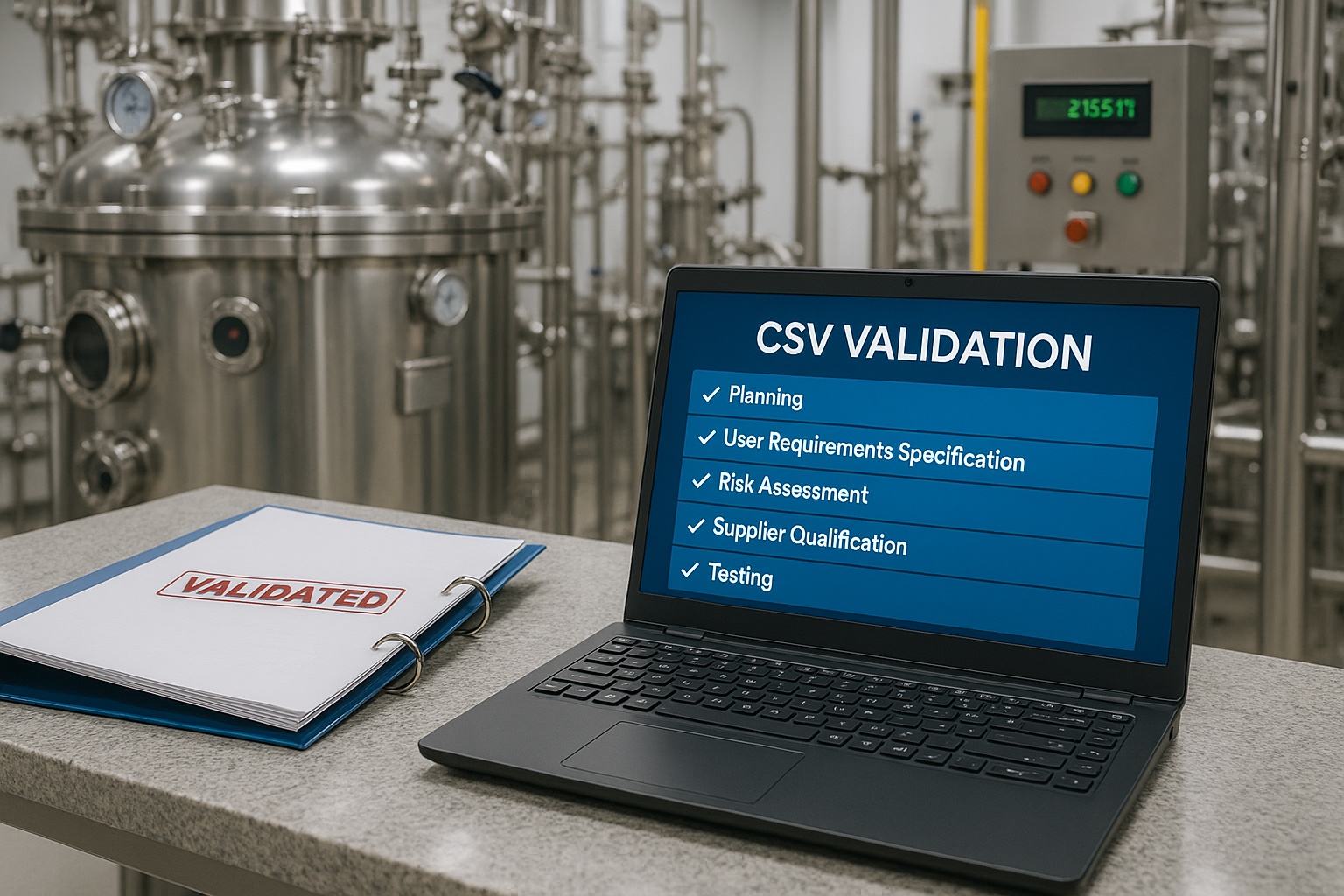
    1. Planning

    Planning is one of the most important aspects of anything. A CSV lifecycle starts with a proper plan. This plan tells about scope, responsibilities, timelines, validation strategy, and system criticality.

    2. User Requirements Specification (URS)

    URS states what the system is supposed to do. It includes functional needs, security, reporting, audit trails, and data handling.

    3. Risk Assessment

    Then comes the risk analysis. It helps in finding out what are the system functions that impact product quality or data integrity. Validation effort must be proportional to risk.

    4. Supplier Qualification

    Vendor audits are important for cloud or SaaS systems. Companies should evaluate the supplier’s development practices, cybersecurity controls, and service agreements.

    5. Design and Configuration

    System configuration or design is documented and mapped to user requirements.

    6. IQ, OQ, PQ Testing

    StagePurpose
    IQ (Installation Qualification)Verifies correct installation, environment setup, and system prerequisites.
    OQ (Operational Qualification)Test system functions, security, audit trails, error handling, and configuration.
    PQ (Performance Qualification)Confirms real-world performance in the production environment.

    7. Data Migration Validation

    All the data that gets moved from a legacy system needs to be checked for accuracy and integrity. That is called data migration validation.

    8. Validation Summary and Go Live

    A Validation Summary Report (VSR) is a report that compiles all evidence and provides final approval to operate the system.

    9. Ongoing Maintenance and Review

    Keeping on checking the maintenance and reviewing the work is very important. It includes training, SOPs, periodic reviews, change control for patches or upgrades, and cybersecurity monitoring.

    10. Decommissioning

    Then there is Decommissioning. You have to properly retire the data. It makes sure that the archived data remains accessible and audit-ready.

    What Gets Tested in CSV

    Proper testing in CSV, makes sure that the system always delivers secure and accurate results. Here is what gets tested in CSV: 

    Type of TestPurpose
    Traceability TestingEnsures all requirements are covered by test cases.
    Positive or Negative TestsVerify expected behavior and error handling.
    Security TestsConfirm access control, login rules, and password policies.
    Audit Trail TestingEnsures audit logs record user actions and cannot be altered.
    Backup or Restore TestingConfirms data recovery and business continuity.
    Interface TestingValidates accurate data exchange between systems such as LIMS and ERP.

    Common Pitfalls and How to Avoid Them

    Here are a few common pitfalls that you may come across while the process is going on:

    • Using vague or untestable requirements: You should write clear and measurable requirements that can be tested. You can use requirement traceability matrices (RTMs) to ensure complete coverage.
    • Relying too heavily on vendors without independent verification: What you need to do, is to perform an independent risk assessment and verify all important functionalities yourself. Do not rely solely on vendor claims.
    • Skipping audit trail reviews: If you skip audit trails, it can result in missing data and integrity issues. Always include audit trail review steps in routine procedures and also verify them during validation testing.
    • Treating CSV as a one-time document exercise: Do not treat CSV as just a documentation. It is a lifecycle activity. Adopt a life-cycle approach with continuous monitoring and periodic assessments.
    • Failing to validate data migration: If you fail to validate your data migration, it can lead to incorrect or corrupted data. It is very important that you perform test migrations, verify data integrity, and document the entire migration process.
    • Not performing periodic reviews after updates or patches: make it a priority to implement a formal change control process and always conduct periodic reviews so that you can confirm that the system is in a validated state.

    Conclusion

    Computerized System Validation is a foundation for trustworthy data and safe products in the pharmaceutical industry. 

    Validation practices need to evolve with time as cloud systems, AI, and automation have started to change the  pharma industry. 

    By following a risk-based and lifecycle-driven CSV approach, companies can stay compliant and audit-ready in the accuracy of their digital systems.

  • What Is Computerized System Validation (CSV)? A Complete Beginner’s Guide

    What Is Computerized System Validation (CSV)? A Complete Beginner’s Guide

    Introduction 

    Today, in regulated industries, digital technology is the most important for operations. Most organizations in pharmaceuticals, biotechnology, medical devices, and clinical research depend on software to drive efficiency and compliance. 

    These systems manage processes that affect the product quality and the integrity of important data. But with great digital power comes an even greater responsibility.

    It is very important to make sure that every computerized system performs the way it should and meets strict regulatory expectations. 

    This is where Computerized System Validation (CSV) comes in. CSV is a structured, documented, and risk-based approach that confirms that a system is reliable and secure. It also makes sure that it is compliant with governing standards throughout its entire lifecycle.

    In short, CSV builds trust in the digital tools that safeguard health and life.

    Why Is CSV Important?

    CSV provides confidence that systems support safe and high-quality healthcare and life-science outcomes. The main objectives of CSV are:

    • Protecting patient or consumer safety
    • Ensuring product quality
    • Maintaining data integrity (aligned with ALCOA+ principles)
    • Demonstrating compliance with regulatory expectations
    • Reducing business risks such as product recalls, regulatory penalties, and data loss

    CSV applies to many types of systems that influence GxP (Good Practice) activities, such as:

    • LIMS and chromatography data systems in laboratories
    • MES, PLC/SCADA, and weigh & dispense systems in manufacturing
    • QMS, CAPA, Deviations, and Complaints systems in quality operations
    • ERP and inventory control systems are used in batch release decisions

    These systems affect decisions that directly or indirectly influence patient outcomes.

    Regulatory Foundations of CSV

    CSV is there to ensure compliance with global regulatory expectations. Here is a quick reference table summarizing the key frameworks:

    Major CSV Regulations & Guidance

    Regulation / GuidelineKey Focus Area
    FDA 21 CFR Part 11Electronic records and electronic signatures, audit trails, system security
    EU GMP Annexe 11Lifecycle validation of computerised systems, change control, periodic review
    PIC/S GMPHarmonised GMP standards for computerised systems in regulated industries
    GAMP 5® (industry guidance)Risk-based lifecycle framework for validation and assurance activities

    Where and When Is CSV Required?

    CSV is needed wherever computerized systems impact GxP processes. Common industries are:

    • Pharmaceuticals and biotechnology
    • Active pharmaceutical ingredients (APIs) and excipients
    • Medical devices and combination products
    • Clinical research and pharmacovigilance
    • Blood and plasma establishments
    • Some food and cosmetic products, depending on the region

    Common GxP Systems Requiring CSV

    System CategoryExamples
    Laboratory SystemsLIMS, ELN, Chromatography Data Systems
    Manufacturing & AutomationMES, SCADA, DCS, equipment control
    Quality ManagementQMS, CAPA, Deviation & Training Systems
    Clinical & SafetyEDC, CTMS, Drug Safety Databases
    EnterpriseERP, Warehouse & Batch Tracking systems

    Core Concepts for Beginners

    Intended Use: Intended use means it’s up to you how the organization will use the system and what part of the system you will use. You don’t have to use every feature the software offers. 

    Risk-Based Approach: Effort and documentation are proportional to GxP impact. High-risk functions require deeper testing.

    ALCOA+ Data Integrity Principles

    ALCOAMeaning
    AttributableClear user identification for every action
    LegibleData must be readable and permanent
    ContemporaneousRecorded at the time of activity
    OriginalTrue source data retained
    AccurateError-free and reliable

    Additional “+”:

    ALCOA+Meaning
    CompleteNo missing data or gaps
    ConsistentLogical and time-sequenced
    EnduringProtected and preserved
    AvailableAlways retrievable when needed

    GAMP 5 Software Categories (Simplified)

    CategoryDescription
    Category 1IT infrastructure (OS, DB, virtualisation)
    Category 3Non-configured software (standard tools)
    Category 4Configured systems (LIMS, QMS, MES)
    Category 5Custom or bespoke software

    CSV Lifecycle: How Validation Works

    CSV follows a lifecycle approach, which is often represented by the V-model. Below, I have put a streamlined view of activities:

    PhasePurpose
    1. PlanningValidation Plan, roles, scope, risk strategy
    2. Requirements & Risk AssessmentURS (User Requirements Specification), risk evaluation
    3. Supplier/Software SelectionVendor audit, documentation review
    4. Specification & DesignFunctional and design specifications, configuration settings
    5. Build/ConfigurationSystem setup, configuration, and unit testing
    6. Verification (IQ/OQ/PQ)Testing installation, functions, and real-world use
    7. Go-Live & ReleaseTraceability matrix, summary report, training, SOPs
    8. Operation & MaintenanceChange control, backup/restore, periodic review
    9. RetirementData migration/archive, ensuring integrity and availability

    IQ = Installation Qualification
    OQ = Operational Qualification
    PQ = Performance Qualification

    Common CSV Mistakes to Avoid

    • Validating everything at the same level instead of using a risk-based focus
    • Too much documentation with little assurance (“paper-heavy validation”)
    • Weak requirements leading to incomplete testing
    • Lack of change control after go-live
    • Ignoring audit trails, security, and data integrity practices

    CSV vs. CSA: What’s the Difference?

    CSVCSA
    Traditional approach, more documentation-heavyModern, FDA-endorsed critical thinking
    Scripted test scripts are dominantExploratory/unscripted and automated testing allowed
    Can be slower and costlierFaster, reduced documentation burden
    Focus on compliance evidenceFocus on assurance of intended use

    Conclusion

    Then I will say that computerized system validation makes sure that software used in regulated industries is reliable and fit for its intended use. 

    CSV is now a very important requirement to maintain product quality and safeguard the data. It is also now important to make sure that you meet global regulatory expectations. 

    Strong CSV practices will help you as a company to build trust and confidently innovate in a rapidly evolving digital environment.

    Get in Touch with us

  • Understanding Temperature mapping: Purpose, process, and Regulatory requirement 

    Understanding Temperature mapping: Purpose, process, and Regulatory requirement 

    Introduction 

    Nowadays, a large number of products need to be stored at a specific and constant temperature to keep them undamaged. 

    The process that is used to make sure that the products are stored at the required temperature is called temperature mapping.

    The first step in a temperature mapping study involves, practically, setting the required conditions for each item and then determining what causes them.

    This is the most critical study because it enables us to figure out how to store things more effectively, and so it guarantees that them to be in proper condition. 

    In this article, let’s understand what temperature mapping is and how it is performed.

    Purpose of Temperature Mapping 

    Temperature mapping (TM) is a process that helps validate the environmental control system:

    • Identify Temperature Deviations 

    The focus is to classify the Hot and Cold Spots in an area. These hot spots frequently occur due to structural concerns such as being adjacent to external walls, windows, cooling coils, heat generators, or poor airflow.

    •  Cold Spots: You will typically find them by cooling vents, refrigeration units, or exteriors in corners.
    • Hot Spots: Hot spots are commonly regarded as hot points.

    Found high up, like by lights, machines, or doors that get opened and closed frequently (say on a loading dock).

    • Establishing Uniformity And Performance 

    The mapping indicates that the storage unit can maintain proper temperatures irrespective of the surrounding conditions. This means that the design and the process function effectively. 

    Additionally, it also testifies that the region operates normally as expected while in use. The reason this is super because it indicates that the space is good enough for keeping materials that require a specific temperature.

    • Sensor Placement Strategy 

    One of the most valuable things a good mapping study can do is pinpoint the best locations for permanent sensors.

    Sensors must be located where they would experience the extremes, including higher or lower temperature zones. This provides the greatest amount of protection for the stored commodity.

    • Risk Mitigation And Continuous Improvement 

    When temperature mapping is performed, the zones in which the performance of the environmental control system is not acceptable are identified. 

    This leads to the definition of quality from a risk-based standpoint. Namely, companies establish exclusion zones in which goods cannot be stored. 

    This also facilitates the development of scientifically-based corrective and preventive action to improve environmental control. Finally, this reduces risk due to loss of product or non-conformity.

    The Temperature Mapping Process 

    The following are the Four Steps to a Temperature Health Check:

    1. The Strategy Session

    You devise a plan first, which consists of:

    • Establishing the Range: Establish what the minimum and maximum acceptable cut-off points are. 
    • Locate the Danger Zones: You search for places where there is likely to be temperature trouble. This can be next to doors, vents, outdoor walls, or heaters.
    • Hiring the “Temperature Police”: Then you need to collect accurate digital data loggers. These devices should be newly certified, meaning you can have confidence in the readings they generate.

    2. The Stakeout

    You strategically sprinkle these loggers across the space in a 3D grid (top, mid, bottom, om, and center/edge). T, loggers are put right where those at-risk spots were pinpointed before. The exact location of each logger is meticulously logged.

    3. The Stress Test

    The loggers record data every few minutes over a period of some days or even weeks. To stress the system, you can:

    • You try the section while it is empty and when it’s at full inventory.
    • You “outrun” a power outage to find out how long the system temperatures are maintained.
    • You run the test in your hottest and coldest seasons to see how the climate is affecting it.

    4. The Final Report Card

    Then you analyze the data for the reality:

    • Hottest Spot.
    • Coldest Spot.

    Regulatory Requirements and Compliance:

    Temperature mapping is a core regulatory requirement in many GxP (Good Practice) environments.

    A. Key Regulatory Frameworks

    Regulatory BodyKey GuidelinesCompliance Requirement
    FDA (U.S.)21 CFR Part 210/211 (cGMP), 21 CFR 820.150 (Storage)Requires facilities to be designed, monitored, and controlled to prevent adulteration, including demonstrating control of environmental conditions for storage areas.
    WHOTechnical Supplement to Annex 9, TRS 961 (Temperature Mapping of Storage Areas)Emphasizes that all new temperature-controlled storage areas must be mapped as part of a fully documented verification process before commissioning.
    EU GMP/GDPAnnex 15 (Qualification and Validation), EU Good Distribution Practice (GDP) GuidelinesRequires initial mapping, seasonal mapping (unless risk-justified), and periodic re-mapping for all temperature-controlled storage and distribution areas.
    USPUSP  (Good Storage and Shipping Practices)Provides guidance on acceptable temperature ranges and the proper use and calculation of Mean Kinetic Temperature (MKT) to assess temperature excursions.

    ​B. Frequency and Re-qualification

    ​Regulatory guidelines generally require temperature mapping in the following circumstances:

    • Initial Qualification: Always needed for new storage areas, refrigerators, freezers, or newly designated storage zones.
    • Re-mapping (Re-qualification): That’s what happens when there’s a major change. This may influence the thermal signature. 

    This also includes a complete overhaul of the HVAC system, structural modifications to the area, changes in load patterns, or when the data tells us that there is a trend of non-uniformity coming our way. 

    The frequency should be based on risk. But internal SOPs frequently request or require a periodic re-qualification.

    C. Documentation and Auditing

    It is hard to overestimate the importance of the temperature mapping study, which should be both wide-ranging and detailed while being simple to check. 

    It is recommended that you retain all documentation with the location, protocol, raw data files of the entire batch, sensor calibration certificate, and final report,  along with CAPA plans filed as long as the storage area was in use. 

    Such information should also be available during regulatory on-site inspections. Throughout regulatory inspections, this is a generic challenge that often leads to severe compliance actions, including product recalls or plant closure.

    Conclusion 

    Temperature mapping is the key to keeping our temperature-sensitive products safe and effective. You might think of it as getting to know your storage areas intimately, knowing exactly how they work. 

    It’s not the case of taking one quick reading, but building a robust science-based program that deals with potential risks, by rigorously monitoring temperatures and following protocols established by the likes of the FDA, WHO, and EMA. 

    You need to make sure your system works well. A little prevention beforehand is a small price to pay for peace of mind and security down the road. It is about doing it right for everyone.

  • What Is Equipment Qualification in the Pharmaceutical Industry? A Complete Guide

    What Is Equipment Qualification in the Pharmaceutical Industry? A Complete Guide

    Introduction

    Do you know how the machines and tools in pharmaceutical manufacturing work? 

    One thing is for sure: the machines and tools used in pharmaceutical manufacturing must work the way they are expected to. 

    If they do not work as expected, unsafe products will be manufactured, and there will be problems with regulators.

    So to make sure that all the equipment works in the right way, equipment qualification is used. It is a way to check and ensure that the equipment that is installed in the place is correct and works properly.

    In this article, I will explain to you what equipment qualification is and will tell you about simple tips to make this process easier and effective.

    What Is Equipment Qualification (EQ)?

    Here, the question is, what is equipment qualification? Let me tell you in a simple way. This process is used to check if your equipment is working the way it is supposed to work and if it is safe. 

    This process is done in steps, and you have to keep documentation for each step to prove that your equipment works properly. 

    Let’s think about a situation. Suppose that you have installed a new machine that fills bottles with liquid medicine. 

    You will want to be sure that it feels the right amount every time and does not leak. You can do this with the help of EQ. 

    This is not just an internal practice. Regulators like the FDA, EMA, and WHO require all companies to follow this process and maintain clear records that show your equipment is working the way it should.

    The Four Phases of Qualification

    Equipment Qualification has four steps:

    1. Design Qualification (DQ)

    Before you buy the equipment, you check if its design is what you require. This checking of the design is called design qualification.

    Let me explain. Think that you need a machine that sterilises tools. DQ will help you choose a model that fits your space and has the right safety features. 

    2. Installation Qualification (IQ)

    After your equipment arrives, the next step is to install it. While installing, you have to check the power supply, water connections, software versions, manuals, and any calibration certificates.

    IQ makes sure your new system is set up correctly.

    3. Operational Qualification (OQ)

    When your equipment is installed, you have to test it. This process of testing the equipment is called operational qualification. This process checks if the machine works correctly at different settings and speeds. 

    4. Performance Qualification (PQ)

    The last step is performance qualification. In this process, you have to run your equipment using the material for production under real production conditions. This step checks if the equipment works fine and performs well. 

    If your results are stable and within limits, that is your proof that your equipment is ready for routine use.

    Simple View of IQ, OQ, PQ

    StepWhat It ChecksWhat You DoReal-Life Example
    DQDoes the design fit your needs?Review specs before buyingChoose the right sterilizer
    IQWas it installed correctly?Check setup and utilitiesConfirm wiring and manuals
    OQDoes it work properly?Run tests at different settingsRun the centrifuge at full speed
    PQCan it do the job daily?Run real batches and check resultsSterilize full loads reliably

    Why Equipment Qualification Matters

    Let’s understand why equipment qualification matters. When the equipment is not properly qualified, many big problems can happen. 

    There can be a poor quality batch or a product recall. And in pharmaceuticals, it is considered a serious compliance issue. 

    Best Practices and Common Pitfalls

    Here, I have mentioned some best practices and common problems related to equipment qualification: 

    Good Practices

    1. Focus on important features: Your first step should be focusing on the important features of your equipment. Identify the important features in your equipment and test them first, as your product quality depends on them. 

    2. Use vendor data wisely: If the manufacturer has performed Factory Acceptance Tests (FAT) or Site Acceptance Tests (SAT), then you don’t need to do the tests yourself. Use those test results where applicable. 

    3. Rely on templates and checklists: I suggest using templates and checklists. If you have standard forms for DQ, IQ, OQ, and PQ, it will help you save a lot of time and prevent errors. 

    4. Make it a team effort: Working as a team is really important. Involve engineering, production, and maintenance teams, too, because each one of these has a different perspective that can help catch issues early.

    5. Track everything: Every test, observation, and result should trace back to a specific requirement. 

    Common Mistakes

    1. Avoid saying things like the machine runs well.” Instead, set measurable criteria. For example, “The machine maintains 100 ± 2 °C for 30 minutes.”

    2. Do not use uncalibrated instruments during qualification because small errors can lead to incorrect conclusions.

    3. If the equipment is repaired or modified, test it again. When you repair or modify the equipment, its conditions change, and its performance can too.

    4. Qualification requires technical understanding and documentation skills. Make sure everyone in your team knows the correct procedures.

    Trends in Equipment Qualification: Going Digital

    EQ is changing. Companies are now using digital tools to do validation faster and with fewer errors  

    TrendWhat It MeansWhy It Helps
    Paperless ValidationEverything is done digitallyEasier tracking and faster reviews
    Digital TwinsUse software to test before real installationAvoid problems early
    Linked MaintenanceConnect EQ to calibration and maintenance systemsStay on schedule with re-testing

    Conclusion 

    In the end, I will conclude this article by saying that equipment qualification might sound like a lengthy process, but it is very important. 

    When you take the time to perform the equipment qualification process, you’re making sure that your products are safe and reliable.

    Next time, you think of performing equipment qualification, follow the steps one by one and keep correct documentation for each stage.

    You need to build proof that your equipment is working correctly and in the way it should, because when regulators want to check your equipment, this paperwork will become your strongest defence.

    If you need help writing protocols or moving to digital EQ, check out our tools and resources at HelpWithValidation.com.

  • How Temperature Mapping Ensures Product Safety and Quality

    How Temperature Mapping Ensures Product Safety and Quality

    Introduction

    What do you think will happen to a vaccine or a life-saving drug if it’s stored at the wrong temperature? 

    Let me tell you. Having just even a few degrees off, even for a short time, can change everything. 

    Vaccines may lose potency, food may spoil faster, and pharmaceuticals may degrade before reaching patients.

    To ensure that no such thing happens, there is a process called temperature mapping. This process makes sure that every place has the desired temperature.

    It is the science behind keeping sensitive products safe and effective. Let me walk you through this article so that it becomes clear to you what temperature mapping is and why it is so important.  

    What Is Temperature Mapping?

    I will now tell you what temperature mapping is in a very simple way. It is a process that measures how the temperature should be inside a space, such as a warehouse or a cold room, over time.

    This process of mapping uses multiple calibrated data loggers, which are placed strategically across the area. It doesn’t use a single thermometer. 

    These sensors record temperature variations at every corner, top shelf, or near doorways and show hidden hot and cold zones.

    The goal is to make sure every single product, when stored, experiences the right environment throughout its shelf life.

    Why It Matters So Much

    Now, let us understand why temperature mapping matters so much. You should know that most of the medicines and food products we consume are temperature-sensitive. Even a small change in the temperature of these products can cause problems:

    • Pharmaceuticals can lose chemical stability.
    • Vaccines can lose their effect in extremely low or high temperatures.
    • Food products can develop harmful bacteria if the temperature is high.

    The World Health Organization (WHO) says that one in four vaccines worldwide gets wasted because of temperature-related problems during storage or transport.

    Because of this reason, regulatory authorities such as USP (<1079>), MHRA GDP, and WHO guidelines have made temperature mapping an important step for all controlled environments. 

    How Temperature Mapping Works

    The process of temperature mapping sounds complex, but it happens in steps. Below, I have mentioned how temperature mapping takes place: 

    StagePurposeWhat Happens
    PlanningDefine goals and risk areasDecide which rooms, freezers, or trucks need mapping, identify potential problem spots, and set acceptance criteria.
    ExecutionCapture real temperature behaviorPlace multiple data loggers across the area, record temperature data for 7–14 days under normal operating conditions.
    AnalysisUnderstand the dataIdentify hot or cold spots, temperature fluctuations, and deviations from the target range.
    Reporting and ActionsTurn insights into improvementsSuggest fixes such as adjusting airflow, relocating sensors, or insulating walls.
    Re-mappingConfirm long-term reliabilityRepeat the mapping after changes or during different seasons to ensure stability year-round.

    Most facilities conduct mapping twice a year, once in peak summer and once in winter, because external weather can significantly influence internal temperature behavior.

    What Makes Temperature Mapping So Valuable

    Now, let’s understand what the things are that make temperature mapping valuable: 

    BenefitWhy It Matters
    Protects Product IntegrityEnsures every product stays within its safe temperature range.
    Prevents Financial LossesAvoids product recalls, rejections, and spoilage.
    Enhances ComplianceMeets WHO, MHRA, and FDA audit expectations.
    Improves Energy EfficiencyIdentifies inefficient cooling zones or faulty HVAC systems.
    Optimizes MonitoringHelps place permanent temperature probes at the right locations.

    Best Practices for Accurate Temperature Mapping

    • Always use calibrated data loggers with traceable accuracy certificates. This ensures the readings you record are reliable. 
    • Then you should conduct mapping during normal operations, not when the facility is empty. Conducting the study during normal operations with products stored and equipment running provides real data about how the facility performs.
    • Always map during peak summer and winter because mapping during the hottest and coldest times of the year confirms that your system maintains stability throughout. This way, it will help you identify weak zones and will ensure consistent product safety no matter what the external weather is like.
    • You should keep analysing your data regularly, as simply recording it is not enough. MKT reflects overall thermal stress over time, while variance highlights unstable areas. 
    • Then make sure to document everything, including protocols and raw data, and follow-ups. You should always keep records of the study plan, calibration certificates, data logs, analysis, and corrective steps.
    • Temperature mapping should evolve with your operations. Repeat it after layout changes, equipment upgrades, or HVAC maintenance. Regular reviews and updates help maintain system reliability and continuous product protection.

    The Bigger Picture

    When we locate the whole process of departure mapping, it might sound like something technical, but I think it is just about putting your trust in the process.

    Whenever you use a vaccine or any packaged food, you trust that it has been stored safely and brought safely from the factory to your hands. 

    That trust is earned through science, which is temperature mapping. This process makes sure that every product maintains its quality and efficacy.

    Temperature mapping takes care of each and every product, whether it’s in a hospital pharmacy or a global logistics network.

    Conclusion

    To conclude the article, I will just say that temperature mapping is a promise that whatever is stored is safe and effective and will be shipped and administered as safely as the date it was made.

    Temperature mapping makes sure that the environment in a warehouse or transport truck is as per the requirements and protects human health and product quality. 

    Because in the end, these products are very sensitive, and even a few degrees of change can make these products harmful and ineffective. 

  • The Science Behind Temperature Mapping: Key Steps and Best Practices

    The Science Behind Temperature Mapping: Key Steps and Best Practices

    Introduction

    You know, places like pharmaceutical warehouses, hospital storage rooms, etc, have to maintain a required temperature before they start anything. 

    The process that allows them to maintain the required temperature is called temperature mapping. It is a scientific way that makes sure that every corner of the storage space is maintained at the right temperature.

    In cold rooms of freezers, some areas might be slightly warmer or cooler, and you won’t be able to know it until you measure the temperature of all of the areas.

    So it is really important to make sure all areas have the required temperature and the temperature does not vary at any place. 

    To make sure that we have the required temperature in the desired area, we follow temperature mapping. It helps in finding varying temperature spots in the area so that the medicines or samples are at the right temperature.

    What Is Temperature Mapping

    I will now tell you what temperature mapping is in a very simple way. It is a process that measures how the temperature should be inside a space, such as a warehouse or a cold room, over time.

    This process of mapping uses multiple calibrated data loggers, which are placed strategically across the area. It doesn’t use a single thermometer. 

    These sensors record temperature variations at every corner, top shelf, or near doorways and show hidden hot and cold zones.

    The goal is to make sure every single product, when stored, experiences the right environment throughout its shelf life.

    Scientific InsightWhat It Means Practically
    Temperature affects reaction ratesEven small fluctuations can degrade sensitive drugs
    Air circulation patterns varyCorners or door zones may get warmer or cooler
    Sensor accuracy mattersA miscalibrated logger gives false assurance
    Heat sources shift over timeMapping needs repeating when layouts change

    Why It’s Important in Pharma and Biotech

    There are industries that deal with vaccines, biologics, or lab reagents. Here, keeping the right temperature is the most important. 

    Agencies like the WHO, ISPE, and FDA require temperature mapping to make sure your HVAC or refrigeration system works in the way it’s supposed to work.

    Let’s say your warehouse needs to maintain between 2°C and 8°C. You can do so by using temperature mapping. This process makes sure that you have your required temperature around every shelf and corner of the area throughout the day and night. 

    In the end, it’s about protecting patients and the integrity of everything you store.

    The Step-by-Step Science of Temperature Mapping

    Step 1: Define What You’re Testing

    To start the temperature mapping, first, you need to identify what you are testing. You need to figure out the area or equipment you have to validate.

    Then you have to set your temperature range, for example, 2–8 °C, and note where risks might be higher.

    Step 2: Design a Smart Protocol

    Before beginning, plan your study.
    Decide:

    • How many sensors to use (at least nine for small rooms)
    • Where to place them (top, middle, bottom, and corners)
    • How long to record (24 hours to 7 days, depending on the space)
    • What conditions to test (door open/closed, power on/off, full vs empty load)
    ParameterTypical RangeExample
    Study duration24 hrs – 7 days48 hrs for a small room
    Data-logging interval1 – 5 min1 min gives more precise results
    Number of sensors9 – 30+Larger warehouses need more


    Step 3:Execute the Study

    • Place your calibrated data loggers according to the plan.
    • Keep the facility running under normal operating conditions.
    • Also, always record external factors like door openings and nearby temperature changes.

    Step 4: Analyze the Data

    • After you have collected your data, I suggest analysing it carefully. 
    • While analysing, look for minimum and maximum temperatures and the areas that go out of range. 
    • Also, notice how quickly temperatures recover after disturbance.
    • The goal is to convert raw readings into clear insights about airflow, insulation, and system performance.

    Step 5: Validate and Report

    • Compare your results against your acceptance limits.
    • If readings are within range, your system is validated.
    • If your readings are not in the range, then you should investigate and correct issues.

    Step 6: Keep Monitoring

    • Temperature mapping is not just a one-time process.
    • You need to keep monitoring your area.
    • You should re-map after major layout or equipment changes, or whenever seasonal temperature variations affect performance. 
    • Most facilities repeat mapping every one to three years.

    Best Practices and Common Pitfalls

    Always follow these practices for a perfect temperature mapping process:

    • Always use calibrated data loggers with traceable accuracy certificates. This ensures the readings you record are reliable. 
    • Then you should conduct mapping during normal operations, not when the facility is empty. Conducting the study during normal operations with products stored and equipment running provides real data about how the facility performs.
    • Always map during peak summer and winter because mapping during the hottest and coldest times of the year confirms that your system maintains stability throughout. This way, it will help you identify weak zones and will ensure consistent product safety no matter what the external weather is like.
    • You should keep analysing your data regularly, as simply recording it is not enough. MKT reflects overall thermal stress over time, while variance highlights unstable areas. 
    • Then make sure to document everything, including protocols and raw data, and follow-ups. You should always keep records of the study plan, calibration certificates, data logs, analysis, and corrective steps.
    • Temperature mapping should evolve with your operations. Repeat it after layout changes, equipment upgrades, or HVAC maintenance. Regular reviews and updates help maintain system reliability and continuous product protection.

    Common Pitfalls

    MistakeWhy It’s a ProblemHow to Fix It
    Too few sensorsMisses critical zonesFollow ISPE or WHO guidelines
    Ignoring the external climateSkews readingsRecord the ambient temperature, too
    Using old mapping dataCauses audit non-complianceRe-map after layout or season changes
    Overlooking humidityAffects product stabilityMonitor both temperature and humidity

    A Quick Example

    Here is how a small cold room (target 2–8 °C) might perform during a mapping study:

    Sensor LocationMin (°C)Max (°C)Status
    Door area1.88.9Out of range
    Center3.27.1Within range
    Rear top2.67.8Within range
    Rear bottom1.58.3Low excursion

    The results show that the door area allows warm air ingress, and the bottom rear gets too cold. These insights help you make precise corrections.

    Conclusion

    To conclude this article, I’ll say that temperature mapping is a scientific and data-driven method to ensure that the products stay safe and efficient. 

    When this process is followed correctly, it meets all the regulatory expectations and also strengthens quality assurance. 

    You should understand that temperature mapping is your storage system’s Health check. It makes sure that your equipment performs as it is required to, and it keeps every while or product as stable as the day it was made.

  • Cleaning Validation in the Pharmaceutical Industry: Ensuring Every Batch Starts Clean

    Cleaning Validation in the Pharmaceutical Industry: Ensuring Every Batch Starts Clean

    Introduction

    When we think about pharmaceutical manufacturing, it’s very common to assume that the labs must be spotless. We think that all equipment must be very clean, and there must be people in cleanroom suits doing their work.

    But, in pharma, just looking clean is not enough. Even a few invisible particles left behind from the previous batch, or just a trace of an active ingredient left, can change what goes into the next product.

    To make sure no such incident happens, cleaning validation exists. This process is a scientific way of making sure that all equipment and the surface are free from any contamination.

    This process is a very important part of Good Manufacturing Practice (GMP). In fact, the FDA, EMA, and WHO take it seriously. They require manufacturers to show evidence that their cleaning process is safe and works well. 

    Let’s go through this article and understand what cleaning validation is and why it is important.

    Why Cleaning Validation Matters

    Cleaning validation is important because even the smallest contamination can put the entire product safety at risk. 

    A few traces of an active ingredient can cause cross-contamination.

    Leftover cleaning agents can react with the next product and change its chemical composition.

    There is also a chance of microbes building up between cleaning cycles. These microbes multiply fast and get into the next batch.

    There have been incidents like this:

    • Cholestyramine Recall (1988): Here, drug batches were contaminated because the solvent drums used earlier for pesticides weren’t cleaned properly. 
    • Penicillin Carryover Cases: Even microscopic traces of penicillin have caused allergic reactions in sensitive patients. These cases became so significant that regulators now require either dedicated equipment or cleaning levels so thorough that there’s no detectable residue at all.

    Global Regulatory Expectations

    Agency/RegionGuideline ReferenceKey Expectation
    FDA (USA)21 CFR 211.67Documented cleaning procedures and validation evidence
    EMA (Europe)EU GMP Annex 15, HBEL/PDE (2014)Science-based residue limits using toxicological data
    WHO / PIC/SGMP Annex on ValidationLifecycle validation and periodic re-validation
    ISPE / PDATechnical Reports 29 & 49Practical sampling, risk-based grouping, and data trending

    Building a Robust Cleaning Validation Program

    1. Validation Protocol

    Every cleaning validation program starts with a written protocol:

    • The scope and objectives of the validation
    • The equipment involved
    • The cleaning method (manual or automated systems like CIP/SIP)
    • The sampling plan and analytical methods to use
    • The acceptance criteria that define what “clean” really means

    2. Trained Personnel

    Only trained operators should perform cleaning and sampling. The thing is that missing any step can lead to contamination that can go unnoticed.

    3. Equipment Design

    You need to identify the hard-to-clean areas, like the gaskets, impellers, and spray balls. These are the places where residue remains.

    4. Cleaning Agents

    The cleaning agent you use should be free-rinsing, non-reactive, and easy to remove. But you also have to make sure that the detergent is also cleaned well after cleaning.

    5. Sampling Methods

    Most facilities use a combination of methods:

    • Swab sampling: For direct residue recovery on critical surfaces
    • Rinse sampling: It is for larger or harder-to-reach areas
    Sampling MethodBest ForDetection Limit
    Swab SamplingLocalized residuesHigh (µg/cm² range)
    Rinse SamplingInternal piping/vesselsModerate (mg/L range)
    Visual InspectionQuick pre-checkApprox. 1–4 µg/cm² visible threshold

    6. Analytical Techniques

    For analytical checking, different tools are used depending on the kind of residue you’re looking for:

    • HPLC/UV: It detects specific active ingredients or cleaning agents. 
    • TOC (Total Organic Carbon): This one measures the total amount of organic carbon in a sample and makes it sensitive to any kind of organic residue, not just the actives.
    • LAL (Endotoxin Test): It is used to detect pyrogenic or microbial contamination, especially critical for sterile manufacturing lines.

    7. Hold Time Validation

    Determine Dirty Hold Time (DHT): How long equipment can sit unclean.  Clean Hold Time (CHT): It is the time for which cleaned equipment remains safe before reuse.

    Both studies prevent microbial growth or residue hardening between processes.

    Setting Acceptance Criteria

    Criterion TypeTraditional LimitModern (Health-Based) Limit
    Dose-Based≤ 0.1 % of the previous product doseDerived from toxicological PDE/HBEL
    Concentration-Based≤ 10 ppm in the next productPDE-based MACO calculation
    Visual CleanlinessNo visible residueValidated visual residue limit (VRL)
    Cleaning Agent ResiduesNone detectedLimit based on manufacturer’s tox data

    Lifecycle Maintenance and Continuous Verification

    Cleaning validation doesn’t stop after three successful runs. It’s a lifecycle process that gets integrated into your site’s Contamination Control Strategy (CCS):

    Design → Validate → Monitor → Reassess → Improve

    You need to keep an eye on swab and TOC trends to find any issues early.

    Revalidate whenever there’s a change in product mix, cleaning agent, or equipment.

    Use risk-based grouping to handle multiple products efficiently.

    And also, keep your documentation secure. Missing data is one of the most common reasons the FDA issues citations.

    Conclusion

    I think Cleaning validation is a promise that every product leaving the facility is safe for the person who’s going to take it.

    You just have to use sensitive analytical methods and regularly review the process. That’s how manufacturers make sure that every piece of equipment starts clean and every batch stays safe.

    In today’s GMP world, it’s not enough to just follow the rules. You have to prove that your process works. 

    Real cleaning validation means protecting patients and earning trust.